
Dietitian Blog | Apr 14 2026
Overfeeding in the ICU: Rethinking early calorie delivery in critical illness
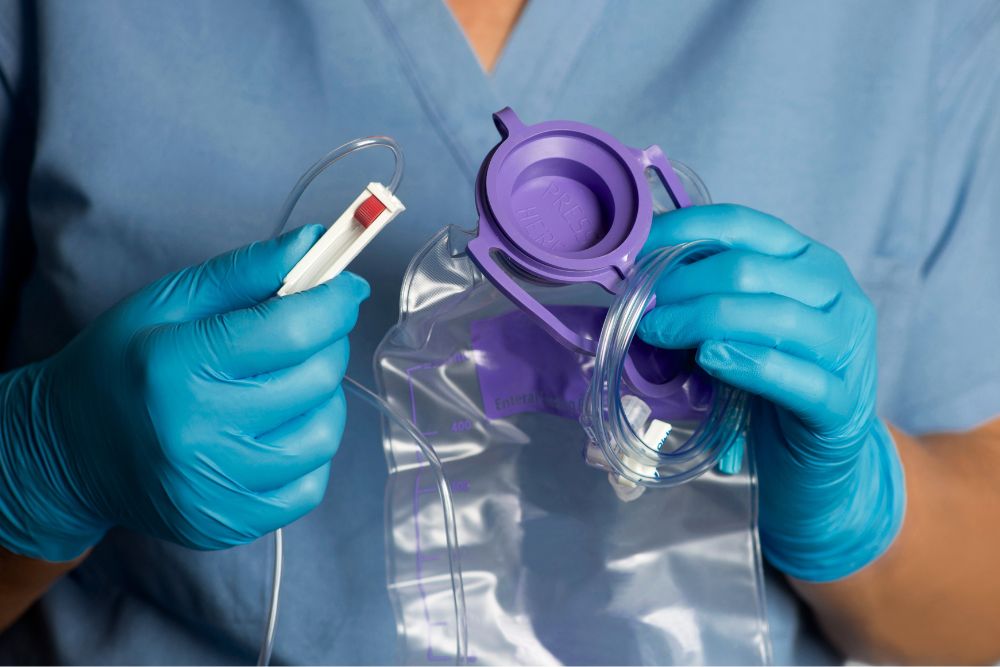
Overfeeding in the ICU is not simply about exceeding a calculated number. It occurs when energy delivery is higher than what the patient’s body can utilize during the acute stress response. It is important for ICU dietitians to recognize that it can occur more easily than many may expect. Early enteral nutrition (EN) is recommended when medically appropriate, but that does not necessarily mean that rushing to provide total estimated calorie needs is beneficial.
As a critical care dietitian, there is a certain balance that needs to be weighed when it comes to feeding patients appropriately.
The dietetic profession trains dietitians to advocate against underfeeding to prevent malnutrition in their patients. Loss of lean muscle mass, extended hospitalizations, and prolonged mechanical ventilation are real concerns that sit in the back of the mind when establishing and adjusting nutrition support plans. On the other hand, modern intensive care unit (ICU) nutrition guidelines caution against providing full estimated calorie needs during the acute phase of critical illness and against overfeeding.
For dietitians in the ICU, it is essential to understand that early EN does not equal providing early full estimated calories via EN. Reaching the estimated calorie goal should not be the first priority. Instead, strategic advancement and adequate protein delivery should be the main focus of nutrition care.
What happens metabolically during critical illness?
Critical illness triggers a profound stress response, resulting in counterregulatory hormones and inflammatory mediators to increase. This then drives increased endogenous glucose production, proteolysis, lipolysis, and insulin resistance. In the acute phase of critical illness, oxidative capacity is limited. Therefore, predicted energy needs may overestimate what the patient can realistically tolerate.
As outlined in the 4th edition of the ASPEN Adult Nutrition Support Core Curriculum, the acute phase is characterized by altered nutrient metabolism that cannot be addressed by simply increasing intake. Delivering full estimated caloric needs during this phase can exceed what the patient’s body can process, leading to overfeeding.

Is early EN is the same as early full feeding?
This distinction is critical for dietitians providing nutrition care in the ICU.
Both the American Society of Parenteral and Enteral Nutrition (ASPEN) and the European Society of Parenteral and Enteral Nutrition (ESPEN) recommend initiating EN within 24 to 48 hours in patients who are hemodynamically stable and without direct contraindications. Early EN supports gut integrity and is associated with improved outcomes compared with delayed EN. However, early initiation should not be confused with rapid advancement to providing full estimated energy requirements.
Current guideline recommendations support a slow, steady approach during the acute phase of critical illness. Rather than advancing a patient’s infusion rate on a standard, incremental schedule, EN can begin with conservative to moderate calorie delivery, gradually progressing to the goal as the patient shows continued tolerance to feeds and as the stress response evolves.
Recent trials reiterate avoiding aggressive feeding regimens during the acute phase, as higher energy intake has not consistently demonstrated improved mortality or other clinical outcomes. ESPEN recommends advancement towards estimated calorie goals after day three of critical illness.
For ICU dietitians, this is rarely as straightforward as it sounds. Early EN may be appropriate once enteral access is obtained, but the decision to initiate and/or advance EN still relies heavily on clinical judgement. Increasing vasopressor requirements, uncontrolled shock, certain gastrointestinal conditions/injuries, or significant intolerance should warrant caution.
It is also worth clarifying what “full calories” actually means. Indirect calorimetry may be used to measure energy expenditure. Or energy needs may be estimated using predictive equations, such as the Penn State equation, or using weight-based calculations (e.g., kcal/kg).
Advancing straight to 100% of estimated calorie needs in the acute phase of critical illness may not reflect what the patient can genuinely metabolize. A more conservative approach that aligns calorie provision with metabolic capacity is more consistent with current guidance.
What are the risks of overfeeding in the ICU?
Overfeeding during the acute phase of critical illness is associated with several risks.
Providing excess energy can increase carbon dioxide production, leading to increased ventilator demand and a delayed vent weaning process. The literature highlights that overfeeding has been associated with longer duration of mechanical ventilation, longer ICU admissions, and even increased mortality in some cohorts.
Beyond respiratory effects, excess calorie provision may also contribute to hyperglycemia, increased insulin requirements, hepatic steatosis, and hypertriglyceridemia at a time when metabolic regulation is already dysfunctional. Early overfeeding is also associated with risk for refeeding syndrome.
These complications are rarely caused by one factor alone, but excess calorie provision can contribute. Overfeeding represents a mismatch between intake and metabolic demand during a time of significant stress on a patient’s physiology.
What strategies exist to help prevent overfeeding?
One well-known strategy is permissive underfeeding, which refers to the intentional practice of providing fewer calories than the calculated estimated need. Studies have demonstrated no consistent improvement in major clinical outcomes when providing higher vs. lower early calorie provision. The goal is not starvation, but to avoid giving excess calories during the early critical illness period.
A recent randomized controlled trial by Mousavian et al. compared hypocaloric versus full-energy enteral feeding in the neurosurgical population. In the first week, the full-energy group received a significantly higher provision of calories and protein compared to the hypocaloric group. However, the two groups received similar percentages of their estimated calorie and protein needs in the second week.
Results showed a shorter duration of mechanical ventilation and length of hospital stay (P = .014 and P = .046, respectively) in the hypocaloric group. No significant difference was identified for ICU length of stay or 28-day mortality.
Importantly, intentionally feeding less than eucaloric energy requirements does not necessarily mean a protein restriction. Guidelines emphasize that protein should remain adequate. Protein needs should be based on catabolic stress and ongoing nitrogen losses rather than on total caloric intake. The most recent ASPEN critical care guidelines recommend approximately 1.2-2 g/kg/day of protein for most critically ill adults.
In 2018, the New England Journal of Medicine published a multicenter, double-blinded, randomized trial evaluating the difference in outcomes between a standard energy group and an energy-dense group in the ICU. Importantly, the protein provision between the groups was consistent. No significant difference was identified in the primary outcome of 90-day mortality, nor in the secondary outcomes. Of interest, the authors concluded that no evidence of overfeeding was observed in either group.
It is important for ICU dietitians to remember that adjustments may need to be made based on clinical judgement. Establishing an appropriate protein target serves to establish the importance of preserving muscle mass, supporting immune response, and promoting wound healing processes during critical illness. Delivering adequate protein while reducing non-protein calories allows dietitians to mitigate the risks associated with overfeeding while still addressing the increased protein needs within the critically ill population.
What do current ICU nutrition guidelines recommend to prevent overfeeding?
Both ASPEN and ESPEN provide consistent direction regarding early feeding and the avoidance of overfeeding in critical illness.
The Guidelines for the Provision of Nutrition Support Therapy in the Adult Critically Ill Patient: The American Society for Parenteral and Enteral Nutrition (2021) recommends:
- Provide 12-25 kcal/kg/day for the first 7-10 days in the ICU
- Provide 1.2-2 g/kg/day of protein
- Avoid overfeeding, whether utilizing early enteral or parenteral nutrition (PN)
- Do not use supplemental PN during the first 7 days in low nutrition risk patients
- Use indirect calorimetry when available
Similarly, the ESPEN practical guideline on clinical nutrition in the intensive care unit (2023) emphasizes:
- Initiate EN within 48 hours unless specific contraindications are identified
- Utilize hypocaloric nutrition during the acute phase (first three days) of critical illness
- Advance towards full EN or PN within 3-7 days if able to measure energy expenditure, or continue use of hypocaloric nutrition throughout the first week of ICU stay if relying on predictive equations for energy needs
- Target approximately 1.3 g/kg/day of protein in most critically ill adults
- Use indirect calorimetry when available
Neither guideline supports aggressive early advancement to full estimated energy needs. Instead, both support a gradual approach that supports the metabolic changes associated with critical illness.
For ICU dietitians, this reinforces an important point. Overfeeding in the ICU is not prevented simply by calculating needs correctly. It requires clinical judgment regarding the timing of initiation, the rate of advancement, the evolution of critical illness, and metabolic capacity.
Practical applications for an ICU dietitian
- Start early but advance thoughtfully. Initiate EN within 24-48 hours unless a contraindication exists. Avoid advancing to full estimated calorie requirements during the acute phase of critical illness.
- Use indirect calorimetry when available. When available, indirect calorimetry remains the gold-standard method to measure energy expenditure and reduce the incidence of both underfeeding and overfeeding.
- Account for non-nutrition calories. Propofol, dextrose-containing IV fluids, and other medications or supportive therapies can meaningfully contribute to total energy delivery. These should be monitored and taken into account when calculating caloric intake.
- Prioritize protein. Even when using a lower calorie strategy, aim to meet protein targets as clinically appropriate.
- Reassess frequently. Metabolism changes as the patient progresses through the acute phase of critical illness. For the ICU dietitian, this means advancing the feeding rate based on the hemodynamic stability, patient progression, and feeding tolerance. Also, consider re-estimating the calorie needs of the patient as their clinical picture evolves.
Conclusion
Overfeeding in the ICU has significant consequences and may be more common than many clinicians realize. Delivering full estimated energy needs too early can provide the patient with more calories than their body can efficiently manage.
It may be tempting to increase calories in malnourished or high nutrition risk patients. However, the unique metabolic condition patients experience during the acute phase of critical illness requires a different approach.
Current literature supports early EN initiation but also cautions against overfeeding in the acute phase of critical illness. ICU dietitians should consider feeding strategies that promote early EN when medically appropriate and that provide suitable calories and protein. Implementing current guidelines in clinical practice helps to elevate the profession and highlight the critical role dietitians play in the care of critically ill patients.
Dietitians On Demand is a nationwide staffing and recruiting company for registered dietitians, specializing in short-term, temporary, and permanent-hire positions in acute care, long-term care, and food service. We’re dedicated to dietitians and helping them enhance their practice and excel in the workplace. Check out our job openings, request your coverage, or visit our store today!
References:
Patel JJ, Shah F. Chapter 34: Critical illness and sepsis. In: Chan LN, Kumpf V, Lord LM, et al. ASPEN Core Curriculum for Nutrition Support. 4th ed. American Society for Parenteral and Enteral Nutrition; 2025:903-920.
McClave SA, Taylor BE, Martindale RG, et al. Guidelines for the provision and assessment of nutrition support therapy in the adult critically ill patient: Society of Critical Care Medicine and American Society for Parenteral and Enteral Nutrition. J Parenter Enteral Nutr. 2016;40(2):159-211. DOI: 10.1177/0148607115621863
Compher C, Bingham AL, McCall M, et al. Guidelines for the provision of nutrition support therapy in the adult critically ill patient: The American Society for Parenteral and Enteral Nutrition. J Parenter Enteral Nutr. 2021;46(1):12-41. https://doi.org/10.1002/jpen.2267
Singer P, Blaser AR, Berger MM, et al. ESPEN practical and partially revised guideline: Clinical nutrition in the intensive care unit. Clin Nutr ESPEN. 2023;42(9):1671-1689. https://doi.org/10.1016/j.clnu.2023.07.011
Chapman MJ, Peake SL, Bellomo R, et al; TARGET Investigators for the ANZICS Clinical Trials Group. Energy-dense versus routine enteral nutrition in the critically ill. N Engl J Med. 2018;379(19):1823-1834. doi:10.1056/NEJMoa1811687
Cehan H, et al. Overfeeding in critically ill adults: association with ventilator duration, ICU length of stay, and mortality. Life (Basel). 2025;15(5):828. doi:10.3390/life15050828.
Mousavian SZ, Pasdar Y, Ranjbar G, Jandari S, Akhlaghi S, Almasi A, Safarian M. Randomized controlled trial of comparative hypocaloric vs full-energy enteral feeding during the first week of hospitalization in neurosurgical patients at the intensive care unit. J Parenter Enteral Nutr. 2020;44(6):1082-1090. doi:10.1002/jpen.1782

About Julia Trainer and Kristen Herceg
Julia Trainer is currently a dietetic intern at VCU Health in Richmond, VA, and is concurrently working toward a Master of Professional Studies in Nutritional Sciences from Penn State University. She is especially passionate about clinical nutrition, with a focus on liver disease, transplant nutrition, and critical care. In her free time, Julia enjoys strength training, running, creating fitness content, and exploring new recipes in the kitchen.
Kristen Herceg, MS, RD, LD, CNSC, has been a dietitian for over ten years. Before joining the Dietitians On Demand team as the Clinical Education Manager, most of her experience was in a large academic hospital focused on nutrition support and critical care. Additionally, she has worked in long-term care, behavioral health, and inpatient rehabilitation. Throughout her career, she has most enjoyed implementing evidence-based practice, as well as teaching and precepting. Outside of work, Kristen loves to travel, read, and hike.
Who we are
Dietitians On Demand is the nationwide leader in providing dietitians with jobs they love. If flexibility, competitive pay, a full benefits package, free CPEUs each month and a team dedicated to dietitians sound good to you, apply to our positions today.


