
Dietitian Blog | Jul 21 2026
An overview of the nutrition-focused physical exam (NFPE)
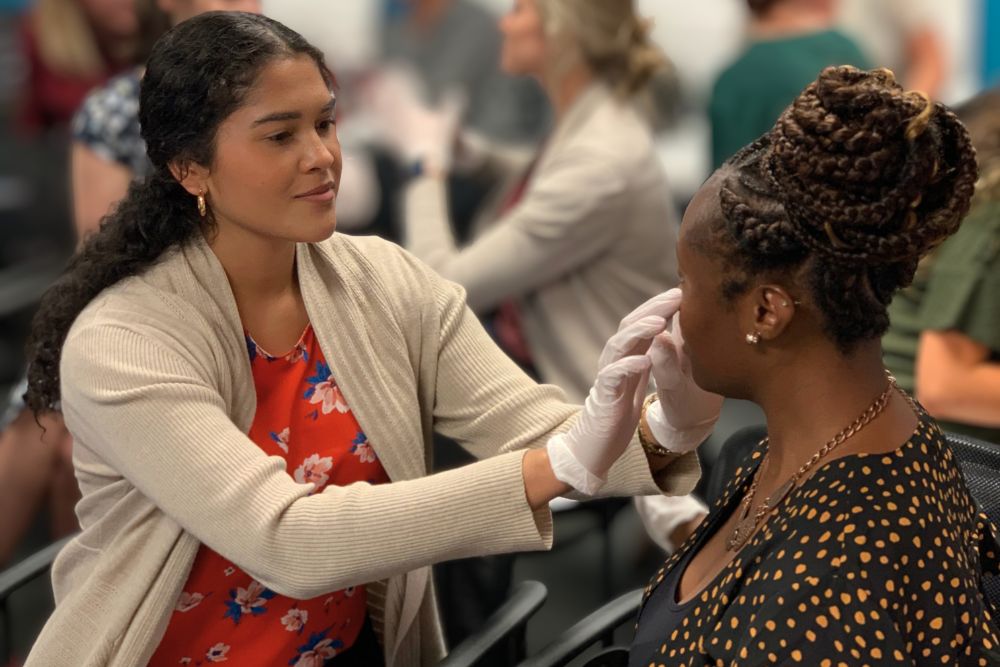
For many clinical dietitians, the nutrition-focused physical exam (NFPE) is already well known and incorporated into their clinical practice. However, for students, dietetic interns, recently credentialed registered dietitians, or seasoned dietitians practicing in non-clinical settings, the NFPE may not be as familiar. Even for experienced clinical dietitians trying out a different care setting or patient population, there may be new facets of the NFPE to discover.
In 2012, the Academy of Nutrition and Dietetics (AND) and American Society for Parenteral and Enteral Nutrition (ASPEN) released a consensus statement defining malnutrition (undernutrition) in adults. Later in 2015, the AND House of Delegates granted a request that registered dietitians use the NFPE as a primary tool for diagnosis of malnutrition, as well as to identify and manage protein-calorie malnutrition, within their scope of practice.
Although these were crucial updates in clinical dietetics that highlighted the utilization of an NFPE in malnutrition assessments, the use of physical assessments in evaluating malnutrition was not necessarily new. For the previous two decades, there was growing literature on the importance of including physical examination techniques to support the identification of malnutrition. Today, NFPEs are more widely used in clinical practice across a variety of healthcare settings, and they are an important skill to learn, implement, and maintain.
Why should clinical dietitians perform a nutrition-focused physical exam?
For clinical dietitians working with adult patients, the NFPE is an essential component of some of the available and validated malnutrition diagnostic tools. For example, the adult AND/ASPEN Indicators for Malnutrition (AAIM) utilize muscle wasting, fat depletion, fluid accumulation, and decreased hand grip strength as four of the six diagnostic criteria for malnutrition, regardless of etiology. All these components are evaluated during physical examination.
In addition to use in malnutrition diagnosis, a physical exam is the time to visually assess signs of micronutrient deficiency or toxicity. Key areas to visualize are the patient’s hair, skin, eyes, mouth, and nails. Corkscrew hairs or bleeding gums may indicate a vitamin C deficiency. For vitamin A, Bitot’s spots and hair casts could be a sign of deficiency, whereas alopecia or cheilitis may indicate toxicity. Glossitis could be indicative of multiple B vitamin deficiencies, such as riboflavin (B2), niacin (B3), B6, B12, or biotin (B7).
Although it’s not used as a primary indicator in the pediatric AAIM, performing a nutrition-focused physical exam remains important in the assessment of malnutrition to provide supporting information. It provides crucial data regarding functionality, as well as helping identify potential nutrient deficiencies.

Steps to perform a nutrition-focused physical exam
First, seek permission from the patient prior to officially beginning. Explain why a physical exam is utilized as a part of a comprehensive nutrition assessment and how it will be performed by visualization and palpation. Be mindful of the patient’s comfort and privacy during the exam. This may look like pulling a curtain in a shared hospital room or asking if it’s ok to perform in front of visitors at the bedside. Or it may entail being aware of mobility limitations.
Take in the general appearance of the patient. Then, a common and widely recommended approach is to work from head to toe, although some may elect to utilize a different workflow (such as looking at muscle tone first, followed by body fat stores). Move in a methodical approach, looking and feeling key areas to assess muscle wasting, body fat depletion, fluid accumulation, and signs of micronutrient deficiencies. Starting with the top of the head and ending with the patient’s feet, note any concerns to then interpret in the context of other key nutrition assessment components (i.e., weight history, acute conditions, medical/surgical history, intake, labs, medications, anthropometrics, etc.)
There are five areas of the upper body and three key areas of the lower body to assess muscle wasting:
- Temporalis muscle
- Pectoralis major/clavicle
- Deltoid muscle/shoulder blades/acromion process
- Trapezius/scapula
- Interosseous muscle/dorsal hands
- Muscles around the patella
- Quadriceps
- Gastrocnemius/posterior calf
There are four main areas to assess subcutaneous fat:
- Face: Orbital and buccal regions
- Upper arm (skinfold underneath the triceps)
- Ribs
- Iliac crest
There are three main areas to assess for fluid accumulation/edema in the lower extremities:
- Over the tibia
- Ankle
- Feet
Muscle and fat loss are evaluated on a scale of mild, moderate, or severe. While pitting edema is typically scaled from 1 – 4+, fluid accumulation in this context is described as mild, moderate to severe, or severe. Finally, functional status is recommended to be evaluated using a handgrip dynamometer in adults and, when measurably reduced, supports a diagnosis of severe malnutrition when using AAIM criteria. Findings from the NFPE may be documented in the assessment section of the nutrition note or possibly within the diagnosis when used for support of a malnutrition diagnosis.
Barriers to the nutrition-focused physical exam
Ideally, all patients receiving a nutrition assessment would be able to receive the full NFPE and would be able to facilitate the exam by being able to sit or stand, wearing minimal clothing, and generally cooperative. However, clinical dietitians performing NFPEs on a regular basis are well-versed in the various barriers that limit the completion of a full examination.
A 2024 study documented the following as the most common barriers in adults (in descending order of frequency) – limited patient mobility, interference of medical equipment, patient refusal, and high pain level. The two most common barriers to full examination in pediatric patients were refusal and limited mobility. Another barrier to most accurately identifying muscle wasting or body fat depletion is if it’s masked by ascites or edema. While a full NFPE is optimal, a partial or incomplete exam can still yield useful information to the clinician.
Do the NFPE components change depending on the patient population?
Although components of the NFPE for the diagnosis of malnutrition have been standardized, there are special considerations in some populations. Special techniques for performing the NFPE, additional steps, and/or unique considerations for interpretation may be applicable. For example, research has been published exploring the performance and application of an NFPE in individuals with eating disorders, obesity, and advanced age. Additionally, there are specific factors that must be considered when performing the NFPE in a telehealth setting.
Putting NFPE into practice
If not yet utilizing the NFPE routinely, an important first step is to continue learning about it. Consider speaking to facility leadership about incorporating NFPEs into standardized assessments or documentation templates. One option to learn more is to check out our On-Demand NFPE Training (approved for 3.5 CPEUs) that includes video demonstrations and more detailed explanations.
If already performing some portions of the NFPE, such as visualization and palpation of muscle wasting and fat depletion, assess the need for additional steps. Consider the use of handgrip dynamometers for assessment of functional status. Or level up skills by starting to assess fluid accumulation or intentionally looking for signs of micronutrient deficiencies, particularly in those who are at higher risk. Work to better correlate the NFPE findings with information gained from other parts of the nutrition assessment.
Regardless of experience level, utilization of the NFPE is an area in which clinical dietitians can always grow. Whether it’s learning for the first time, refreshing knowledge, implementing into practice, or increasing clinical skills, there’s an opportunity to further professional practice and help patients with better informed medical nutrition therapy.
Dietitians On Demand is a nationwide staffing and recruiting company for registered dietitians, specializing in short-term, temporary, and permanent-hire positions in acute care, long-term care, and food service. We’re dedicated to dietitians and helping them enhance their practice and excel in the workplace. Check out our job openings, request your coverage, or visit our store today!
References:
Galang M, Bury C, Pogatschnik C, Dowhan L. Chapter 11: Malnutrition Screening and Assessment. In: Chan LN, Kumpf V, Lord LM, et al eds. ASPEN Adult Nutrition Support Core Curriculum. 4th ed. ASPEN; 2025: 257-291.
House M, Gwaltney C. Malnutrition screening and diagnosis tools: Implications for practice. Nutr Clin Pract. 2022;37(1):12-22. doi:10.1002/ncp.10801
Hummel AC, Cummings M. Role of the nutrition-focused physical examination in identifying malnutrition and its effectiveness. Nutr Clin Pract. 2022;37(1):41-49. doi:10.1002/ncp.10797
Jiminez EY, Lamers-Johnson E, Long JM, Mordarski BA, Ma X, Steiber A. Completion of a Nutrition‐Focused Physical Exam with hospitalized adults and pediatric patients: Secondary analysis of a prospective cohort study. Nutr Clin Pract. 2024;39(4):888-902. doi:10.1002/ncp.11137
Key Nutrition Screening, Assessment, and Malnutrition Diagnostic Processes and Tools for Children and Infants. ASPEN website. Published February 2, 2026. Accessed June 24, 2026. https://nutritioncare.org/wp-content/uploads/2024/12/Nutrition-Screen-Assess-Diagnose-Children.pdf
McKeever L. Chapter 8: Fat-Soluble Vitamins. In: Chan LN, Kumpf V, Lord LM, et al eds. ASPEN Adult Nutrition Support Core Curriculum. 4th ed. ASPEN; 2025: 193-208.
McKeever L. Chapter 9: Water-Soluble Vitamins. In: Chan LN, Kumpf V, Lord LM, et al eds. ASPEN Adult Nutrition Support Core Curriculum. 4th ed. ASPEN; 2025: 209-230.
Mordarski B. Nutrition Focused Physical Exam Pocket Guide. 3rd ed. Academy of Nutrition and Dietetics; 2021.
Wagner E, Sentongo T. Chapter 30: Assessment of Nutrition Status by Age and Determining Nutrient Needs. In: Corkins MR, Bobo E, Christensen ML, Larson-Nath C, Tome RB, Plogsted S, eds. 3rd ed. ASPEN; 2024: 617-653.

About Kristen Herceg
Kristen Herceg, MS, RD, LD, CNSC, has been a dietitian for over ten years. Before joining the Dietitians On Demand team as the Clinical Education Manager, most of her experience was in a large academic hospital focused on nutrition support and critical care. Additionally, she has worked in long-term care, behavioral health, and inpatient rehabilitation. Throughout her career, she has most enjoyed implementing evidence-based practice, as well as teaching and precepting. Outside of work, Kristen loves to travel, read, and hike.
Who we are
Dietitians On Demand is the nationwide leader in providing dietitians with jobs they love. If flexibility, competitive pay, a full benefits package, free CPEUs each month and a team dedicated to dietitians sound good to you, apply to our positions today.


