
Dietitian Blog, Nutrition Support | Jul 29 2025
From hospital to home: Transitioning a home parenteral nutrition patient
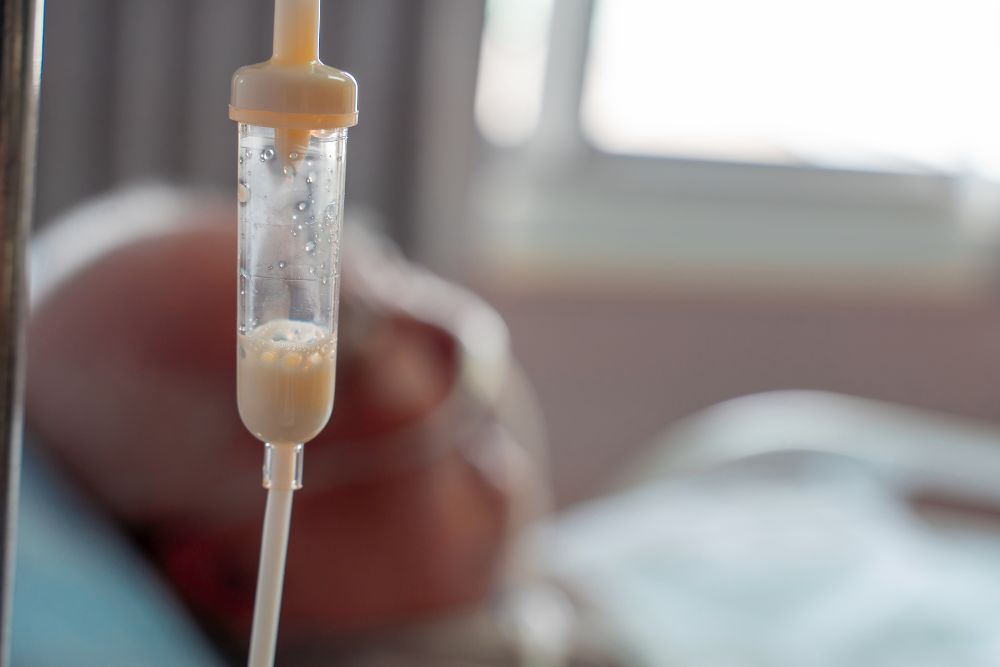
For patients requiring long-term use of parenteral nutrition (PN), one of the greatest transitions occurs as they return home after hospitalization. An interdisciplinary team approach is crucial for ensuring a successful transition home. Although not as common as home enteral nutrition, home parenteral nutrition (HPN) is still quite prevalent. The most recent data from 2013 estimated that over 25,000 individuals in the United States rely on HPN.
What is a dietitian’s role in preparing a patient for discharge on home parenteral nutrition?
For a patient discharging on home parenteral nutrition for the first time, the dietitian may need to advocate for a PN regimen that not only factors in optimal nutrition provision but also has great respect for quality of life. A cycled PN regimen allows for freedom by providing hours apart from the infusion pump. Time away from the pump can be valuable for a variety of reasons, such as working, attending appointments, or social events.
Cycled PN has other benefits in comparison to continuous PN, such as a reduction in the risk of hepatobiliary dysfunction. Once a patient has reached their goal PN regimen with stable blood glucose and serum electrolytes, it is time to consider cycling. Cycling PN earlier in the hospital stay can be beneficial for discharge planning.
How to cycle parenteral nutrition
The duration of cycled PN varies greatly between 8 and 22 hours/day. There are several factors that influence the cycle length, most notably blood glucose control and fluid status. These same factors are helpful to consider if a patient is appropriate for a “fast track” transition from continuous to cycled PN or if a more incremental transition is safer. One randomized controlled trial concluded that “fast track” cycling from 24 to 12 hours was safe in patients without diabetes or major organ dysfunction.
Whichever approach is deemed most appropriate for the patient, it is important to remember that tapering during the first and last 1-2 hours of infusion can be helpful for the prevention of rebound hypoglycemia or respiratory distress with cycled PN.
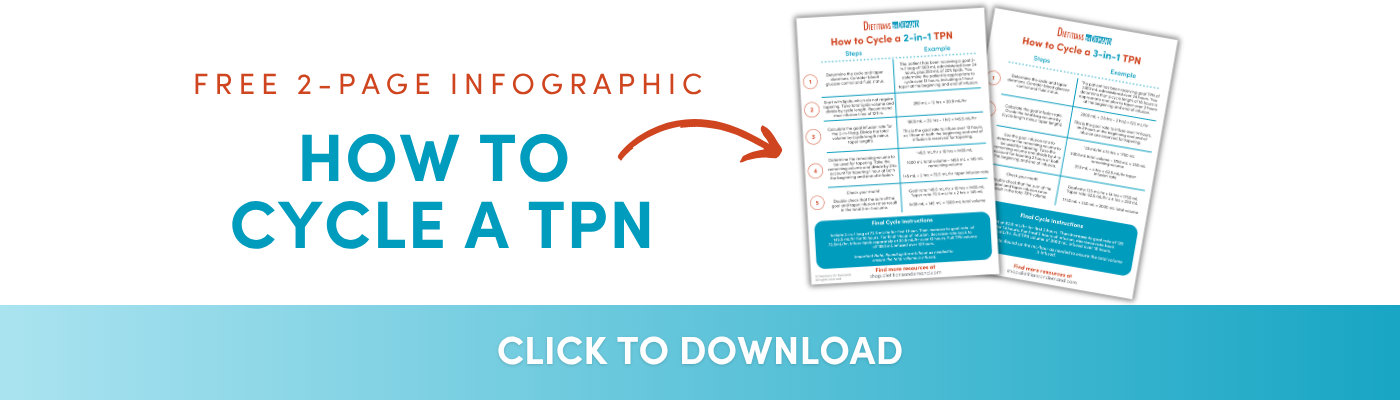
How to calculate cycled PN with a 1-hour taper at the beginning and end of infusion:
Total volume of PN in mL ÷ (Hours of cycle – 1) = mL/hr goal infusion rate
Goal infusion rate x (total infusion duration – 2) = Volume infused at goal rate
Total volume – volume infused at goal rate = Remaining volume for taper
Remaining PN volume ÷ 2 = mL/hr infusion rate for tapering
Example:
1800mL PN cycled over 12 hours
1800 ÷ (12 – 1) = 164mL/hr goal infusion rate
164 x (12 – 2) = 1640mL volume infused at goal rate
1800 – 1640 = 160mL remaining volume for taper
160 ÷ 2 = 80 mL/hr infusion rate for tapering
Final cycled PN regimen: Initiate PN at 80mL/hr for the first 1 hour. Then increase to the goal rate of 164mL/hr for 10 hours. For the final 1 hour of infusion, decrease the rate back to 80mL/hr. Total PN volume of 1800mL infused over 12 hours.
Established patients on home parenteral nutrition
For established patients receiving home parenteral nutrition, similar factors should be considered. Whether it is appropriate for an HPN patient to continue their home regimen while inpatient is largely dependent on the reason for hospitalization. The feasibility of continuing an HPN regimen should be evaluated carefully on admission based on lab results (including blood glucose and electrolyte monitoring) and assessment of calorie and protein needs in the setting of acute injury/illness or exacerbation of chronic conditions.
Often, PN will be run continuously when first admitted due to concerns for potentially tenuous hemodynamics, fluid status, and/or blood glucose levels. The inpatient dietitian should monitor closely for patient stability and appropriate timing for the transition back to cycled PN. Keep in mind that it is possible that the HPN regimen utilized before hospitalization may no longer be appropriate upon discharge.
After discharge
When preparing for discharge, be sure to provide any available follow-up information for ongoing outpatient management of their HPN care. Whether it is a prescribing provider, outpatient dietitian, and/or the home infusion company, these key members of the patients’ care team are available for questions and concerns that may arise after discharge.
For any patient on HPN interested in receiving further education or online support, The Oley Foundation is a great resource to recommend for more information, community, and/or advocacy. Whether a patient is discharged from the hospital on home parenteral nutrition for the first time or the hundredth time, registered dietitians play a crucial role in preparing them for a successful transition.
Dietitians On Demand is a nationwide staffing and recruiting company for registered dietitians, specializing in short-term, temporary, and permanent-hire positions in acute care, long-term care, and food service. We’re dedicated to dietitians and helping them enhance their practice and excel in the workplace. Check out our job openings, request your coverage, or visit our store today!
References
Mundi MS, Pattinson A, McMahon MT, et al. Prevalence of Home Parenteral and Enteral Nutrition in the United States. Nutr in Clin Pract. 2017;32(6):799-805.
Stout SM, Cober MP. Cyclic Parenteral Nutrition Infusion: Considerations for the Clinician. Nutrition Issues in Gastroenterology. 2011;97:11-24.
Initiation and Advancement. Nutrition Care Manual website. https://www.nutritioncaremanual.org/topic.cfm?ncm_toc_id=275661#. Accessed July 4, 2025.
Austhof SI, DeChicco R, Cresci G, et al. Expediting Transition to Home Parenteral Nutrition With FastTrack Cycling. J Parenter Enteral Nutr. 2017;41(3):446-454.

About Kristen Herceg
Kristen Herceg, MS, RD, LD, CNSC, has been a dietitian for over ten years. Before joining the Dietitians On Demand team as the Clinical Education Manager, most of her experience was in a large academic hospital focused on nutrition support and critical care. Additionally, she has worked in long-term care, behavioral health, and inpatient rehabilitation. Throughout her career, she has most enjoyed implementing evidence-based practice, as well as teaching and precepting. Outside of work, Kristen loves to travel, read, and hike.
Who we are
Dietitians On Demand is the nationwide leader in providing dietitians with jobs they love. If flexibility, competitive pay, a full benefits package, free CPEUs each month and a team dedicated to dietitians sound good to you, apply to our positions today.


